Risk Assessment and monitoring
Key Watchouts before Choosing Suppliers and Dealers: A Practical Guide for Today’s Risk-Aware Businesses
 Vayana

Gone are the days when onboarding a new supplier or dealer was a simple procurement or sales decision. Hidden compliance, financial, and operational risks within partner networks can disrupt cash flow and fulfilment. Effective Credit Risk Assessment, Supply Chain Risk Management, and Compliance Monitoring are now essential.
Here are the key watchouts every business should assess.
1. KYC, Fraud and Identity Risks
Identity verification is the first and most critical step. Discrepancies in basic details like name, address, business status, and registrations can signal transparency gaps or attempts to mask activity. Some other common early red flags include:
• Businesses with multiple inactive or outdated statutory registrations
• Frequent name changes without a clear business rationale
• Directors associated with multiple stressed entities
• Entities that appear dormant for years and suddenly become active
• Businesses listed at mass-registration addresses or shared workspaces, despite claiming large-scale operations
Fraud patterns also emerge through behavioral cues: sudden changes in ownership, related entities with erratic financial performance, and mismatches between physical presence and claimed business scale. Spotting these signs early helps prevent exposure to impersonation, circular trading, tax evasion, or front entities used for high-risk transactions.
2. Financial Health: Reading the Story Behind the Numbers
Profitability is not the only criterion; businesses must assess liquidity, cash flow, leverage, efficiency, and performance trends. For example:
- A supplier may show profits but record weakening cash flow from operations, indicating poor cash generation and inability to handle large or urgent orders
- A dealer may report consistent revenue but reveal rising receivable days, suggesting they struggle to collect from their own customers
- Inventory buildup over multiple years can indicate demand slowdown, obsolete stock, or inefficient production planning
- Sharp swings in quarterly performance may hint at customer loss, supply disruptions, or inconsistent order flow
Leverage ratios, contingent liabilities, and related-party transactions also provide insight into how aggressively a business is borrowing and whether its financial behavior aligns with prudent long-term operations. Sustained deterioration typically signals underlying stress and should be fed into informed Credit Risk Assessment.
3. Credit and Payment Behavior: A Window into Reliability
Businesses that pay inconsistently often collect inconsistently, and this instability eventually affects everyone in the supply chain. A distributor who regularly delays payments often ends up delaying remittances during periods of demand slowdown, while a supplier with repeated short-term borrowings may be stretching working capital, signaling difficulty in meeting large or time-sensitive orders. Therefore, key watchouts include:
- Frequent delays in statutory payments, such as GST or Provident Fund
- Restructured loans, missed instalments, or lender disputes
- Pattern of extending payables while shrinking receivables
- Multiple recent credit enquiries with banks and NBFCs
- History of delayed payment to vendors or channel partners
4. MCA Compliance and Governance Gaps
Compliance behavior is an indicator of a company’s discipline and internal controls. Warning Signs in this area often precede both financial deterioration and legal trouble. Look for:
- Delayed or missing financial filings
- Auditor resignations or qualifications
- Frequent changes in directorships or shareholding
- Heavy or unusual related-party transactions
- Struck off or inactive group entities linked to the business
Poor governance often accompanies disorganized financial management, disputes with stakeholders, or inconsistencies in statutory records, making strong Compliance Monitoring even more essential.
5. Supply Chain Stability: Capacity, Concentration, and Contingency
Even stable businesses can become unreliable if their own supply chains are stretched or concentrated. A supplier generating 60%–70% of revenue from one customer faces significant exposure if that customer reduces volumes. A dealer dependent on volatile commodities may struggle during price spikes.
Watch for signs such as to ensure robust Supply Chain Risk Management:
• Overdependence on a single customer or limited suppliers
• Dependence on imports vulnerable to geopolitical or shipping disruptions
• Insufficient production capacity or outdated machinery
• Lack of alternative sourcing or contingency plans
• Seasonal or erratic production cycles affecting fulfilment predictability
6. Litigation and Legal Risks
A single case may be incidental. A pattern of litigation usually signals operational, governance, or financial instability. Red flags include:
• Repeated insolvency or bankruptcy filings
• Recovery suits from lenders or large vendors
• Criminal cases related to fraud, cheque bounce, or misappropriation
• Ongoing contractual disputes with customers or distributors
7. Market Reputation and Behavioral Signals
Softer cues offer powerful insight into a partner’s dependability. Customer complaints, quality issues, product recalls, or supply inconsistency often surface through informal channels long before they appear in formal documents. Look for:
• Deteriorating product reviews or negative sentiment in trade communities
• High employee attrition, especially in finance or operations
• Sudden scaling without infrastructure to support growth
• Persistent negative news coverage or media scrutiny
8. ESG and Sustainability Compliance
ESG risks are increasingly relevant, especially for businesses tied to global supply chains. Environmental violations, worker safety lapses, or poor waste management practices not only violate regulatory norms but can jeopardize long-term contracts. Watch for:
• Non-compliance with environmental permits
• Unsafe working conditions
• Questionable sourcing practices
• Gaps in data privacy or community impact norms
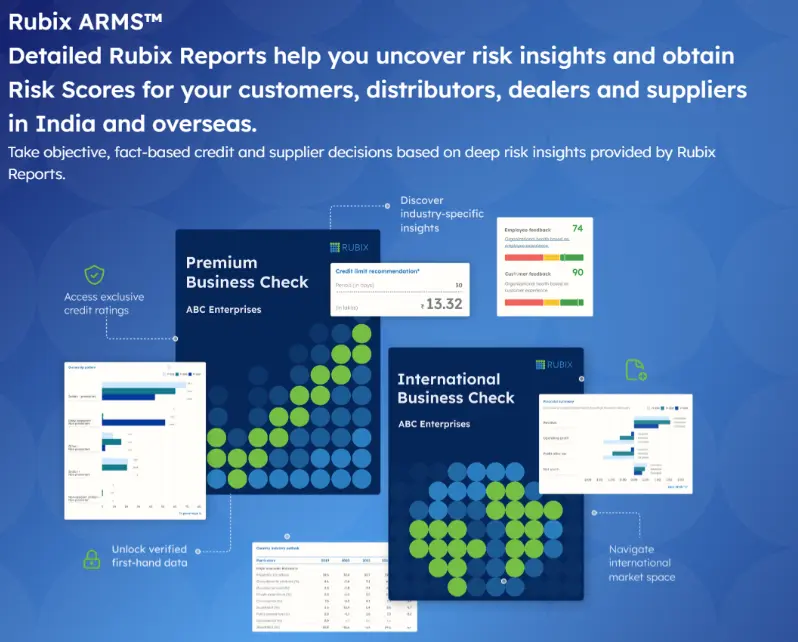
In conclusion, a thoughtful review across these dimensions supports Supply Chain Risk Management, Credit Risk Assessment, and Compliance Monitoring. With Rubix Business Checks businesses can avoid hidden risks, strengthen partnerships, and build supply chains that are resilient, compliant, and future-ready.
Strong partners build strong businesses. Choosing them wisely is one of the most strategic decisions you can make.